
Interview with the Recipient of one of our projects: Deputy Commander of a UGV Company
“Every UGV mission saves at least two people from putting their lives at risk”: On the role of the UGVs in the 1st Unmanned Systems Battalion of the 59th brigade
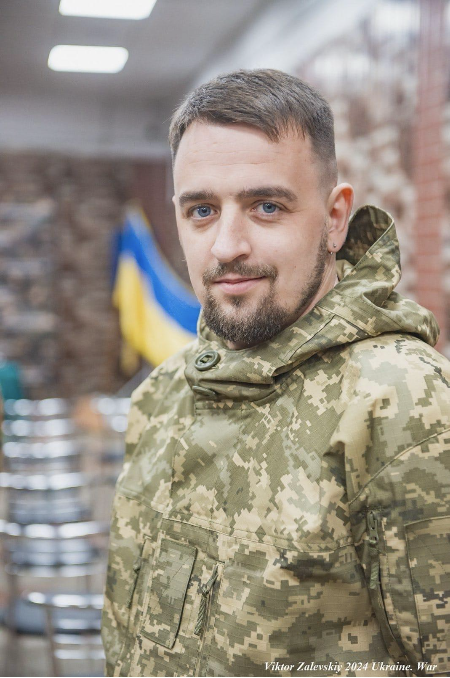
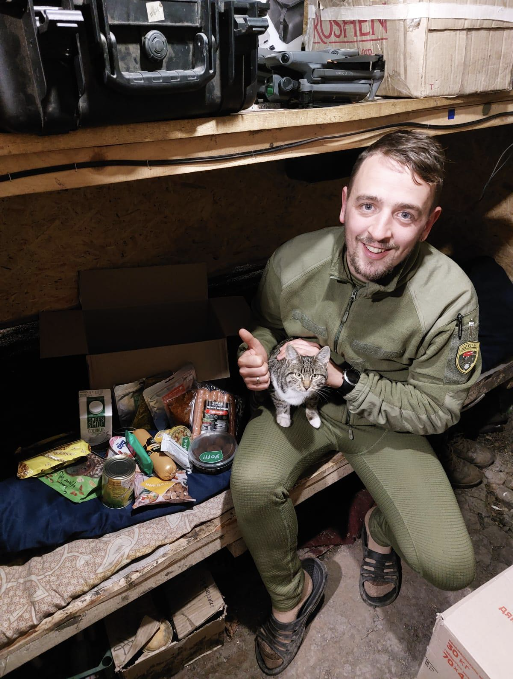
Interview with Roman Polishchunk, call sign “Skin”
Deputy Company Commander UGV Company, 1st Unmanned Systems Battalion, 59th Separate Assault Brigade of the Unmanned Systems Forces of the Armed Forces of Ukraine
1. Ukraine recently captured an enemy position for the first time and forced the soldiers to surrender using only drones and unmanned ground vehicles, without any direct involvement of ground troops. Do you view this as an exception, or is it a sign of how military operations will generally be conducted in the future?
This was already being done about two and a half years ago. There was a unit called “Dovbush’s Hornets” in the 68th Brigade; they carried out assault operations using unmanned systems, completely destroying the enemy, and then troops would move into the destroyed positions. But this wasn’t publicized. When there’s a leak online, or when it becomes very widespread, then it’s allowed to be shown to the public. Such operations have been around for a very long time. As for how the war will develop from here - I don’t know; it’s evolving rapidly. But people will still be fighting; you can’t do without human involvement.
2. How does the increased use of UAVs and UGVs affect the conduct of military operations by Ukrainian troops and the risks they face every day?
It helps preserve personnel - saving their lives and ensuring they remain fit for duty. As for UGVs specifically, they mainly protect our drivers. Every UGV mission saves at least two people from putting their lives at risk. And our statistics show that one in ten missions results in the destruction of a vehicle along with the drivers - they are either wounded or killed. This gives a rough estimate of the number of lives or health saved. Overall, the increase in the UGV unit’s personnel was done due to the impossibility of conducting logistics, as everything is controlled by enemy drones. They control the logistics routes, use “waiting” [“sleeping”] drones, can send two or three drones at a target simultaneously, and strike everything moving along that route. That’s why we’ve partially switched to air delivery and UGVs and are trying to sneak between their FPVs.
3. What role do UGVs currently play in your operations, and how has their deployment evolved since the start of the full-scale war?
Currently, this is the main logistics method in the battalion. Unfortunately, this area began to develop only when there was an urgent need for it. We didn’t have the opportunity to work on this beforehand, to train, or to prepare the personnel. Before that, people could carry out combat missions, and there were enough armored vehicles. When we ran out of armored vehicles and people began refusing to go out on missions - because every other mission resulted in casualties, the destruction of equipment, or deaths - the command began to view this area in a completely different light.Overall, in Ukraine, UGVs had been developing quite well since 2023; there were people who foresaw that there would be a major problem with logistics being disrupted by FPV drones, and that we would run out of experienced drivers capable of getting behind the wheel and driving fearlessly. Then this process slowed down a bit in 2024 - 2025. And when logistics became a pressing issue in areas like ours, in Pokrovsk, this sector took off again.
4. What are the biggest technical and operational challenges you face in deploying UGVs? Especially regarding their use in varied terrain, communications, and enemy countermeasures.
The biggest problem is that UGVs, straight off the production line, aren’t ready for full-function use in combat conditions. All manufacturers have many shortcomings - for some it’s communications, for others the landing gear, and for others the software is still in its infancy. There are very few manufacturers that deliver a finished product ready to perform missions in our conditions right away. And usually, the drones that would satisfy us are too expensive - 2 to 3 million UAH per drone [40,000 - 60,000 EUR - ed.].
- Why is it difficult to make a UAV that is ready for use in the field right out of the box, and why does every unit have to modify them?
A lot of input data is required here, because UGVs are used on different frontlines, for different tasks, and people also have different visions for their application. It depends on the specifics of the unit, the varying skills of the personnel, and many other variables. For example, for some, a 20-km range is sufficient to complete a mission. We, however, need at least 20 km; we cannot get close, as we have strong enemy UAV units in front of us that cut off our logistics. Everywhere, the situation is different, the needs are different, the communication needed is different, the optimal chassis type is different, and the payload is different. Therefore, there are so many variables here, and manufacturers cannot account for them all. There’s another thing - if I, being an active-duty soldier, were to manufacture an UGV, I would know exactly what kind of UGV I needed to make. When a UGV is designed by someone who isn’t fighting in the current war conditions, they can’t make it the right way without having all the input data and without coming here.Sometimes they lack the ability, sometimes the desire. That’s why it’s easier for them to make a basic setup, and then each unit will customize it for themselves. Likewise, let’s not forget the importance of pricing policy. A fully-fledged product will be very expensive, and then the question is whether the market is ready for this, whether there will be demand for it. As of today, the market is ready to buy UGVs for 300,000 UAH [6 000 EUR - ed.], but for 2.5 million [50 000 EUR - ed.] - probably not. I deal with not only UGVs, but with various types of drones, and we have to modify a lot of drones that are incomplete on the market. The same problems and the same lack of understanding are everywhere.
5. For which mission types do you deploy UGVs most frequently in your battalion, and where do you see their greatest tactical advantage compared to using personnel?
In our battalion, UGVs mainly carry out logistical missions. The advantage is that when I see a report that one of my UGVs carrying supplies has been hit, I simply report the incident to higher command and calmly go back to my business. But when a vehicle with people is hit - that’s a very complicated situation involving evacuation, calling in medical services, and deploying a new crew to take their place; often I have to go out myself. Plus, psychologically, it’s very hard - losing good fighters who, at best, are injured. But in the case of a UGV - it’s just that the metal burns up, and that’s it.
6. Which unit capabilities or resources currently have the greatest impact on the success of operations on the front lines?
It’s all about the system. The entire system influences the battlefield - all units are vital components; it’s a large structure. The combat units themselves, engineers, engineering reconnaissance, communications, logistics, rear support, food, clothing, psychological training, recruitment, and so on. Of course, combat operations are the most dangerous. But the entire unit works together, and for every soldier in the field, there are several working in the rear. If we’re not talking about the entire battlefield, but specifically about our unmanned systems unit, then this includes both long-range and short-range reconnaissance, as well as long-range and short-range strikes. To carry out combat operations, all ofthis must be prepared and delivered to the positions. That’s why we can’t just highlight, for example, the pilot who presses a button, because for a drone to take off, 90% of the work is done in the rear, and every specialist, every commander, contributes their 5-10%, after which the pilot presses the button and the drone takes off. If we’re talking specifically about resources, we always have shortages; we’re always fighting with a deficit. There’s probably never been a day when we could sit down and say we have everything we need to do our job. Right now, for example, we’re talking about UGVs - because there’s a very acute shortage of it. Currently, we’re covering 50-60% of the battalion’s logistics, but we need to cover 100% - so that we have everything in stock and so that armored vehicles only have to go out for personnel rotations. All other logistics needs must be covered by robots. And right now, it’s just a matter of resources; the operators’ experience comes with time.
7. How do you assess the enemy’s ability to adapt to new technologies, such as UGVs and drones?
The enemy is very strong; they learn very quickly. They mine our supply routes, target our vehicles, set up at our intersections and wait to hit anything that passes by, and shoot down our drones in the air. We had one “Termit” UGV that survived nine hits from enemy FPVs and one “Molniya” UAV. It survived two or three FPVs a day - it was a real “Mad Max.” So the enemy really went after our logistics; they saw that we were no longer driving large vehicles, that we were starting to use UGVs, and began mining and attacking all these vehicles on the logistics routes. We have our own response: we protect our vehicles - we use electronic warfare systems if it’s appropriate for the cargo, we intercept and destroy their attack drones, we camouflage the UGVs with nets, we attach wires that will stop the FPVs as they approach, and at major intersections we set up posts to monitor for danger; the electronic warfare system works very well. We’re gradually adapting to what they’re doing. The enemy has long since adapted to the technological advancements on our side. We disrupted their supply lines to the front lines a long time ago, so they’ve adapted to that.
8. What kind of support from European partners is currently the most effective, and where do you see gaps and a lack of understanding of the real situation?
I can’t speak on military aid provided through the government or the Ministry of Defense; I can only speak on what comes to my unit or directly to me - from foreign volunteers or acquaintances. I have a rough idea of my unit’s needs, I assess the front line, and I understand that no one can meet the demands of a war as large as the one we’re currently facing. That’s why I think everyone is helping as best they can. Perhaps some could help more. But it’s very hard to care about Ukraine from a distance. There are many caring people from many countries. Some come, some don’t, but they help - they for example buy vehicles. Like right now, there’s help with UGVs, providing funds to support the unit, for drone modifications, generators, and power stations. So I wouldn’t say there’s no help; it’s just that we’re still always fighting with a shortage of everything. As soon as we secure a certain resource, we immediately rush to find another, then yet another, and soon we’re facing a shortage of that first resource again - a need we thought we’d met just last month.
- Is this a dynamic situation with changing needs, or are your supply gaps more or less stable in specific areas?
If we look at how the situation has developed, for example, there used to be a shortage of certain other drones, such as FPVs, but now the state is supplying them to a great extent. I think that in a year, we may be supplied with sufficient quantities of UGVs as well. But for now, there is a shortage of them. The government is trying to supply the troops at all levels, but sometimes certain items are in short supply. For example, a small volunteer group can help us with items costing 20,000 to 30,000 UAH. Larger volunteer groups can help with items costing 100,000 to 200,000 UAH. But volunteers can’t afford to buy drones that cost millions of UAH; that’s something the state has to do. And over time, the state will see these gaps and may be able to fully equip the units, but then at the same time it will not be able to cover smaller purchases, such as Starlink terminals, power stations, and so on. These needs will then be covered by the volunteer contacts of each unit.
9. Setting aside the topic of technology, what motivates you and your comrades to keep fighting, and what would you like to convey to the people in Europe who support your work?
I don’t know about other people; everyone has their own motivation and their own perspective. When I ask myself this question, I don’t have an answer, because there is a war in my home and I must defend my home. I can’t say that I’m tired or have lost any motivation. I am a realist; I see the situation and I see that I must fight. As for what I’d like to convey to our friends and partners: try to be prepared for anything, so that if you face problems, and God forbid, war, you’ll be ready for it, and you won’t be wearing rose-colored glasses, as Ukrainians once did.
